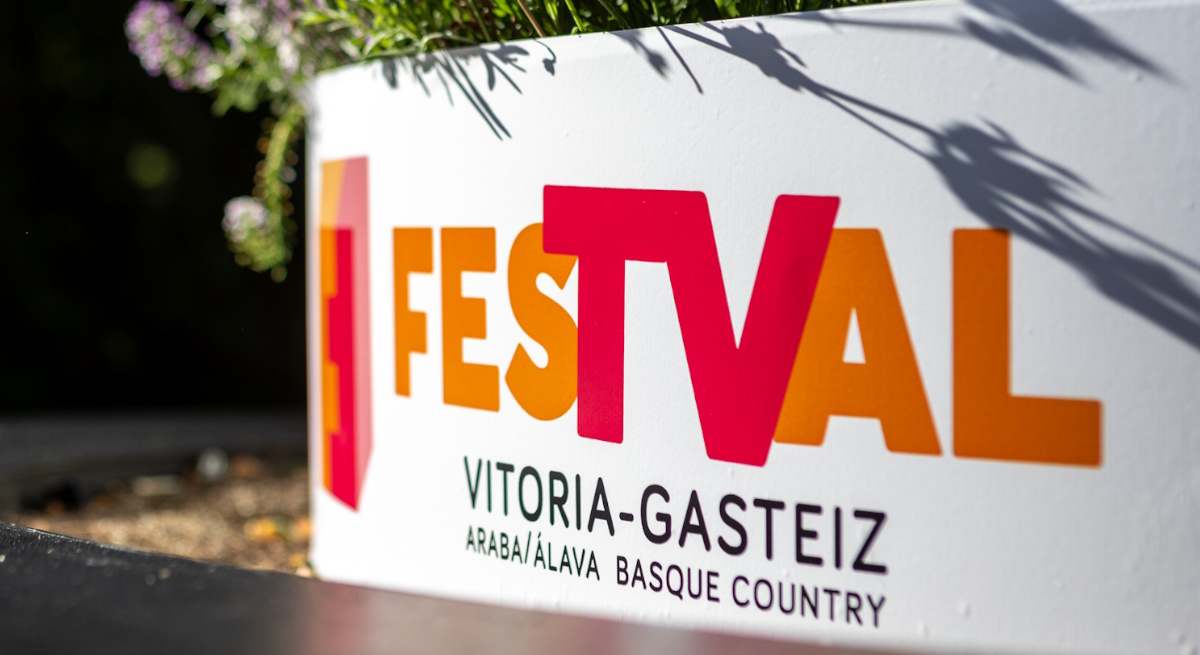
The new television season will have one of its first major showcases at FesTVal 2026, which will take place in Vitoria-Gasteiz from 7 to 12 September. The Europa Conference Centre will be the main venue for a programme comprising world premieres, presentations, industry events, activities open to the public and the closing gala.
During the event, broadcasters, streaming platforms and production companies will present some of their upcoming programmes and release many of the first images associated with them. The 2026 edition has already announced fiction, entertainment, documentary and regional programming, reflecting the diversity of content currently found within the television industry.
But the launch of a programme is no longer limited to a press conference. Official photographs, interviews, vertical videos, statements, trailers and social media content all form part of the same communication strategy.
This transformation also changes the way we think about space. A promotional set should not merely serve as a backdrop for an event, but as a temporary base from which to produce content tailored to different channels, occasions and audiences.
FesTVal and the dawn of television discourse
FesTVal occupies a unique position in the broadcasting calendar because it coincides with the time when broadcasters and streaming platforms begin to announce their main programmes for the new season.
A preview screening provides an opportunity to present a drama before it hits the screens. A press conference introduces a new format. An interview with the lead actors offers insights into the project. The photocall, meanwhile, produces images that will subsequently appear in the media, on social media and in promotional materials.
All these actions help to shape the initial impression of the content.
The festival does not dictate how each campaign should be run, but it does reveal a clear trend: the launch has become a process spread across different media and formats. Traditional television remains central, although it shares the spotlight with streaming platforms, digital media and social media channels.
The promotional campaign must respond to this context without diluting the programme’s identity. Each element may have its own style, but they must all convey a coherent message about what is being released, who it is aimed at, and why it deserves the audience’s attention.
From a one-off presentation to a content ecosystem
For years, television promotion focused mainly on press releases, cast photographs and media interviews. These materials remain important, but they now coexist alongside new requirements.
A broadcaster may wish to produce a general video to preview the season, whilst the platform requires specific content for each programme. The press team needs photographs and statements. Social media profiles look for short, relatable content tailored for mobile viewing. The actors or presenters themselves may also post material on their own channels.
Consequently, a promotional event no longer yields just a single outcome. It can become the starting point for a small ecosystem of interconnected elements.
This development does not mean that everything needs to be recorded. The indiscriminate accumulation of material can lead to costs, delays and content that is ultimately not used. The approach must be editorial: each piece should be produced because it serves a purpose within the launch.
The space must then be designed to fit in with that strategy. Before considering sets, backdrops or furniture, it is necessary to know what materials are required and how they will be allocated throughout the campaign.
Define a content matrix before editing
Preparation of the set should begin with a clear list of deliverables.
It is not enough simply to state that interviews and content for social media will be recorded. It is advisable to specify who will appear, how long each piece will be, in what format it will be delivered, and when it is due to be published.
A lengthy interview may be intended for YouTube or a corporate platform. A statement lasting just a few seconds may be suitable for news programmes or online media. A vertical video may introduce a character, pose a quick question or show a reaction from the cast. Photographs may need to be taken individually, in pairs and as a group.
There are also less obvious materials that it is worth making provision for: storyboards, shots of talent entering and leaving the set, clean footage for graphics, images of the set-up, or silent clips that may be used in later edits.
Defining this matrix enables us to plan the schedule properly. It also prevents us from discovering at the end that a format is missing, that certain people have not been able to attend, or that the available material is not suitable for the planned channels.
The decision regarding the space then becomes more precise. Rather than designing a generic set, an environment is created that is capable of delivering the content the campaign actually needs.
Organising the set as a production workflow
When journalists, photographers, film crews, communications officers and the people in the spotlight all come together, the schedule for the day becomes just as important as the visual presentation of the event.
A single area may be sufficient for an interview or a simple photo shoot. However, shoots involving several participants and numerous deliverables often benefit from being organised into different areas.
The main stage can host the presentation, a panel discussion or the recording of longer pieces. A nearby, more intimate area allows for individual interviews without having to rearrange the set-up. The photocall is for the media and photographers, whilst an additional space can be reserved for short videos or digital activities.
These areas should not operate as isolated compartments. Their value lies in creating a straightforward pathway for talent and teams.
Clear planning enables a person to finish their photo shoot and move on to an interview without having to travel long distances or wait for the main set to be changed. It also makes it easier for various tasks to proceed in a coordinated manner, provided there are no disruptions to the picture, sound or movement.
The result is a smoother working day and a production process that is less reliant on constant set changes.
You might be interested in: Our article on Audiovisual Recce.
The time required for talent development influences all planning
At a television event, actors, presenters, directors and producers often have limited availability. In the space of a few hours, they may have to speak to various media outlets, attend a launch event, record promotional clips and take part in a photo shoot.
That is why the route must be designed with people in mind, not just the technical teams.
Grouping tasks together helps make the most of each time slot. Once the cast is ready for the camera, they can complete several related scenes before moving to a different location or changing costumes. Interviews can also be organised by topic to avoid everyone being asked exactly the same questions.
Editorial coordination is particularly important when there are embargoes or restrictions on content. Some statements may be published on the day of the presentation, whilst others must be withheld until the premiere. Certain plot details may not yet be disclosed.
These conditions must be communicated to journalists, producers and network managers before filming begins. Otherwise, a technically sound piece may be unusable because it contains information that cannot yet be broadcast.
Efficiency is not about filling every minute of the schedule, but about producing high-quality content without burning out the creative team or compromising the consistency of the launch.
A recognisable identity in horizontal, vertical and photographic formats
The promotional design should convey the essence of the content without necessarily replicating its original setting.
A series might be based on a colour palette, a texture or a recognisable element from the story. A game show might opt for a more graphic design. An entertainment programme might use elements that convey energy, a sense of closeness or interaction.
The choice of elements must be deliberate. Including too many logos, screens or decorative elements can detract from the people and make framing difficult.
Furthermore, the design must work in different aspect ratios. A composition designed exclusively for television may lose information when adapted for vertical video. A logo positioned at one end may disappear in a square crop. A background that is too detailed may be distracting in close-ups during an interview.
That is why it is advisable to work with visually uncluttered layouts and elements that can be moved or rearranged. Modularity allows for variety without disrupting the continuity of the campaign.
The photocall should also form part of this identity, but it does not have to be an exact replica of the main stage. You can use the same visual elements, arranged in a way that works well for both individual and group photographs.
The photocall as an editorial asset
The photocall usually produces some of the most widely shared images from a television presentation. The photographs appear in the general and specialist press, news agencies, corporate profiles and the personal social media accounts of those featured.
At FesTVal, the importance of this coverage has been further emphasised in 2026 with the creation of the Víctor Quintas Awards, which aim to recognise the work of the photographers covering the festival.
Given its importance, the photocall must be conceived as more than just a backdrop featuring brand logos.
The composition should allow for different groupings, ranging from a single photograph to an image featuring a large part of the cast. It is also advisable to bear in mind that the photographs will be cropped and reused in different formats.
The location also has operational implications. It must allow photographers to work without obstructing access to interviews or the stage. When photography and video crews share the same area, it is necessary to organise their shifts so that their movements and the statements being made do not interfere with one another.
A well-organised photocall does more than simply record who attended the launch. It produces material that helps to identify the content and extend its public presence.
Create a stock of materials for the whole season
Not all content produced during a presentation needs to be published straight away.
Some will be used to announce the release date. Others may introduce the characters, accompany the launch of a trailer or remind viewers of a new episode’s broadcast. It is also possible to schedule interviews and short features for later in the season.
This approach enhances the value of the event. Rather than focusing all communication on a single date, the production company builds up an organised archive of resources that it can draw on as the campaign progresses.
To achieve this, the material must be categorised from the outset. Each file should be linked to its contributors, format, duration, intended publication date and any restrictions on use.
It’s also a good idea to create some visual variety. Small changes to the framing, the furniture or the background elements help ensure that subsequent posts don’t look as though they’ve all been taken from a single shoot.
The aim is not to conceal the fact that the footage was filmed on the same day. The aim is to produce a collection that is flexible enough to accompany different moments of communication without losing its sense of unity.
Ciudad Inmersiva Madrid as the setting for a multi-platform promotional campaign
Ciudad Inmersiva Madrid offers versatile spaces for television, photography and digital content productions. The site features studios of varying capacities, outdoor areas, offices and private car park, all within a 40,000-square-metre complex situated around 15 minutes from Madrid.
This set-up allows an event to be organised as an integrated production. The main stage, the photocall, the interviews and the digital elements can all be arranged within the same venue, meaning that each element does not have to be held at a separate location.
The scale of the event does not mean that all projects need to use multiple halls or large-scale set-ups. The layout must be tailored to the number of participants, the number of teams and the planned programme.
Ciudad Inmersiva Madrid also offers controlled access, round-the-clock on-site security, indoor and outdoor car parks, props and a network of partners specialising in audiovisual services, catering, cleaning and waste management.
These resources make it easier to organise events where communication, production, photography and digital creation need to work together in a coordinated manner.
Rather than simply replicating a television set, the aim may be to temporarily construct the promotional world of the programme: a recognisable, adaptable environment designed to generate different elements as part of the same campaign.
From a one-off premiere to an enduring identity
FesTVal 2026 will once again bring together in Vitoria-Gasteiz some of the premieres and presentations that will give a preview of the new season. But the promotion of this content will not end when the lights go out at the end of each event.
The images, interviews and videos produced to mark the launch will continue to appear over the coming weeks. In many cases, they will be the audience’s first encounter with the series, the programme or its stars.
For this reason, the promotional set takes on a role that goes beyond simply serving as a backdrop. It is the place where an identity begins to take shape, one that can be carried forward across television, the press, streaming platforms and social media.
The trend is not simply about producing more content. It is about planning more effectively what materials are needed for the launch and creating an environment that enables these to be produced consistently.
When strategy, space and production are conceived as a whole, a single day’s work can fuel different phases of the campaign without each piece feeling like a repeat of the previous one.
The new television season doesn’t just begin with a date in the schedule. It begins when a programme format manages to project its own distinctive and recognisable image on every screen where it reaches its audience.